How to Evaluate Graphene Materials: Six Specifications That Matter
The term “graphene” is used for a broad range of carbon materials with very different structures, formulations, and performance profiles. For customers, the material name alone is therefore not enough. A meaningful evaluation requires clarity on four dimensions: layer count, morphology and flake geometry, formulation, and structure and surface chemistry.
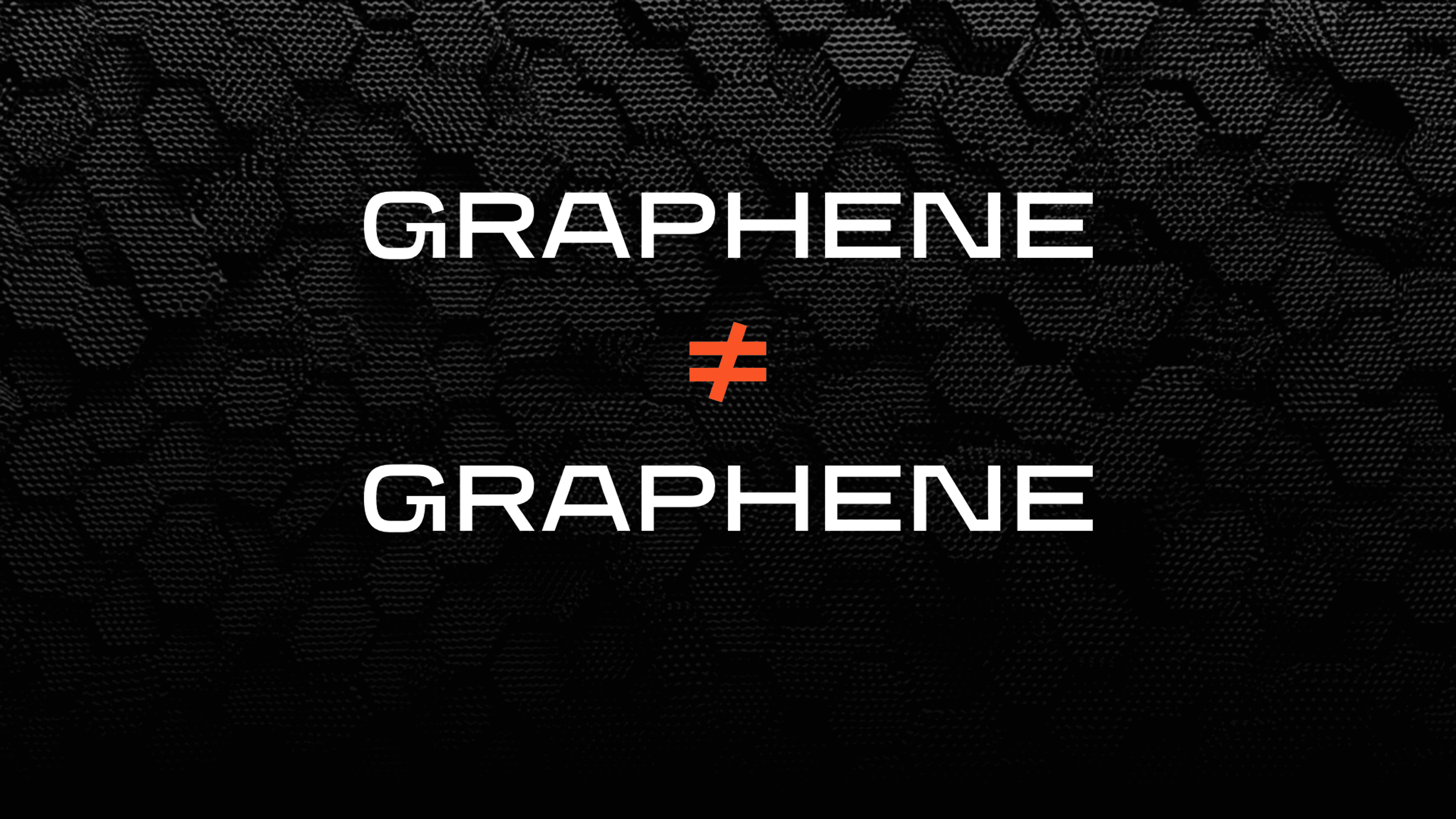
One Name, Many Different Materials
When you hear “diamond”, you probably know roughly what to expect: Sparkling. Expensive. Hard.
When you hear “carbon”, you do not — because diamond, graphite, and coal are fundamentally different materials.
Today, “graphene” is much closer to the second case.
The term describes a broad family of carbon materials rather than one precisely defined product. Materials sold under this label can differ significantly in their structure, dimensions, surface chemistry, supplied form, and resulting performance.
This diversity is not inherently negative. It reflects the different production methods, formulations, and target applications that have emerged around graphene.
However, it also means that the term itself provides very little information about how a specific material will behave.
Four Dimensions That Define a Graphene Material
To understand what a graphene product actually is, four dimensions need to be considered together.
1. Layer Count
Graphene materials can range from single-layer sheets to few-layer graphene, thicker multilayer structures, and graphite-like particles.
Fewer layers generally bring the material closer to graphene’s intrinsic properties, including high specific surface area and strong two-dimensional character.
However, layer count should not be assessed in isolation. The ideal structure depends on the intended application, processing route, and required balance between performance, stability, and cost.
A material described simply as “graphene” may therefore represent anything from a few atomic layers to particles that are already much closer to graphite.
2. Morphology and Flake Geometry
The geometry of graphene flakes strongly affects their behavior in processing and in the final application.
Important parameters include:
lateral flake size
thickness
aspect ratio
flexibility
overall morphology
Large, thin 2D flakes can cover wider areas and reduce the number of flake-to-flake contacts required to form a conductive network. This can influence bulk conductivity, coating behavior, flexibility, and interaction with surrounding particles or surfaces.
Smaller or thicker flakes can behave differently during mixing, coating, compression, or incorporation into a composite.
The graphene market also includes porous 3D architectures and adjacent materials marketed under the graphene umbrella, such as “graphene nanotubes.” These materials can have fundamentally different structures and functions despite sharing the same commercial label.
3. Formulation
A graphene material is not defined only by its solid carbon structure.
The supplied formulation is equally important for industrial use.
Graphene may be delivered as:
powder
aqueous or solvent-based dispersion
paste
wet or dry agglomerate
ready-to-use ink
The formulation determines how easily the material can be integrated into an existing production process.
Customers should also understand whether surfactants, dispersing agents, binders, or other additives are present. These components can influence electrochemical behavior, drying requirements, material compatibility, and qualification effort.
A graphene material may have strong intrinsic properties but still be unsuitable if the supplied formulation does not fit the customer’s process.
4. Structure and Surface Chemistry
Graphene materials can range from highly crystalline and largely pristine structures to selectively functionalized, strongly oxidized, or defect-rich variants.
These differences affect both performance and processability.
A highly ordered carbon lattice generally supports high electrical conductivity. Oxidation and structural defects can disrupt that lattice and reduce conductivity, while also improving dispersibility or chemical reactivity.
Functionalization can be used more selectively to tune compatibility with solvents, binders, active materials, polymers, or specific interfaces.
The relevant questions are therefore:
How crystalline is the material?
Which defects are present?
Is the surface functionalized?
Which functional groups are attached?
How do these changes affect the intended application?
Performance Is the Result
Conductivity, barrier behavior, mechanical properties, chemical stability, and processability should not be viewed as separate from the four dimensions above.
They are the result of how layer count, morphology, formulation, and surface chemistry interact.
For conductive applications, for example, the conductivity of an individual flake is only the starting point.
What ultimately matters is the conductivity of the film, coating, bulk material, or network formed by many flakes.
For barrier applications, flake aspect ratio, alignment, and defect density may be decisive.
For mechanical reinforcement, flake geometry, surface interaction, and dispersion quality can determine whether the material improves or weakens the final composite.
The relevant performance profile therefore needs to be assessed in the actual target system.
The Production Method Explains the Differences
Different production methods are the underlying cause of many of these material differences.
The process influences:
how graphite layers are separated
whether flakes remain large or become fragmented
how many layers remain
whether defects are introduced
which surface chemistry is created
which formulations can be produced
Mechanical exfoliation, oxidation and reduction routes, electrochemical exfoliation, and bottom-up production methods each generate different material profiles.
For customers, however, the name of the production method alone is not sufficient.
The supplier should be able to explain how the chosen route creates the stated specifications and how these specifications translate into expected behavior in the target application.
How Customers Should Evaluate Graphene
Before selecting a graphene material, customers should get clarity on four dimensions:
layer count
morphology and flake geometry
formulation
structure and surface chemistry
The producer should then explain how the production process leads to these characteristics and provide evidence for the resulting performance in the intended formulation, coating, or component.
This matters because two materials sold under the same graphene label may behave completely differently.
One may be optimized for conductivity.
Another for dispersion stability.
Another for barrier performance.
Another for mechanical reinforcement or interface modification.
The right material can therefore only be identified in relation to the intended application.
Specification Before Label
Graphene has developed into a broad and versatile material family.
That creates significant opportunities, but it also makes careful material selection essential.
The label “graphene” tells customers which material family they are dealing with.
The specifications explain which material they are actually buying — and whether it is likely to work in their process.
Getting that clarity early helps avoid surprises later and significantly improves the chance of selecting the right graphene for the job.