From Additive to Platform Material: eGraphene Use Cases in Batteries
Most battery materials have a single function. eGraphene is being explored across cathodes, anodes, dry coating, current collector primers, and Li-metal interfaces—making it a potential platform material for battery design.
Most battery materials have a clearly defined role. Cathode active materials store lithium. Binders hold particles together. Separators prevent short circuits.
Conductive additives create electronic pathways. As a result, most materials appear in only one location within a battery cell. Graphene is different. Its combination of conductivity, geometry, and surface chemistry allows it to interact with multiple battery components and interfaces. This is why graphene is increasingly being explored not as a single-purpose additive, but as a platform material.
## What Makes a Platform Material?
A platform material is a material that can address multiple technical challenges across different parts of a system. For batteries, this requires a combination of properties that are rarely found together:
electrical conductivity
processability
compatibility with different formulations
ability to form ultra-thin coatings
interaction with interfaces
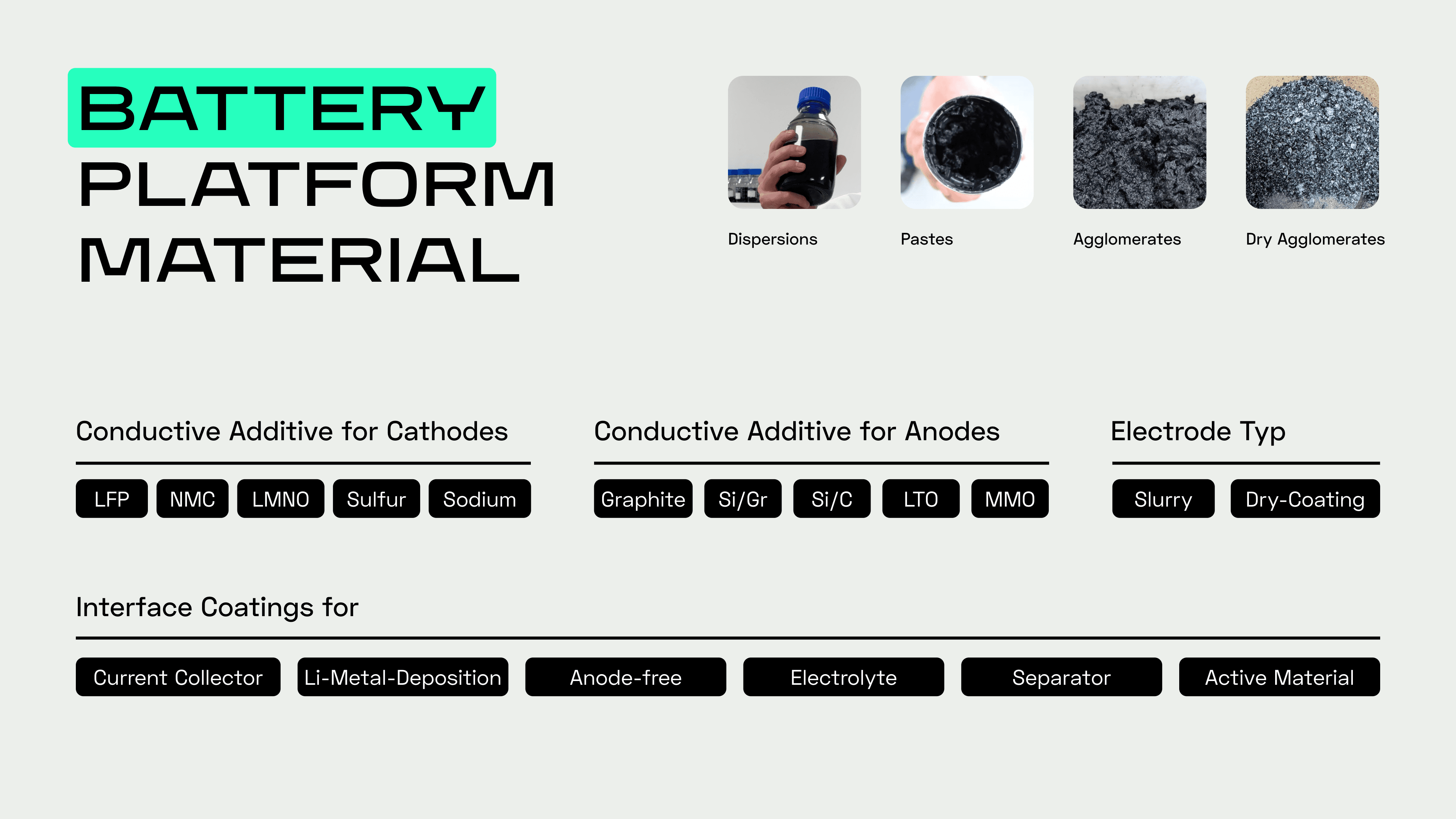
This is where eGraphene becomes interesting. Through in-situ functionalization during electrochemical exfoliation, eGraphene combines high conductivity with stable, surfactant-free processability. Depending on the application, it can be supplied as:
dispersions
pastes
wet agglomerates
dry agglomerates
This enables integration into different battery manufacturing routes and material systems.
## Conductive Additives for Cathodes and Anodes
The most established use case is as a conductive additive. In cathodes, conductive additives create electronic pathways between active material particles and the current collector. The same principle applies to many anode materials, including graphite, silicon-containing anodes, and LTO. The objective is always the same: Establish conductivity while minimizing the amount of inactive material required.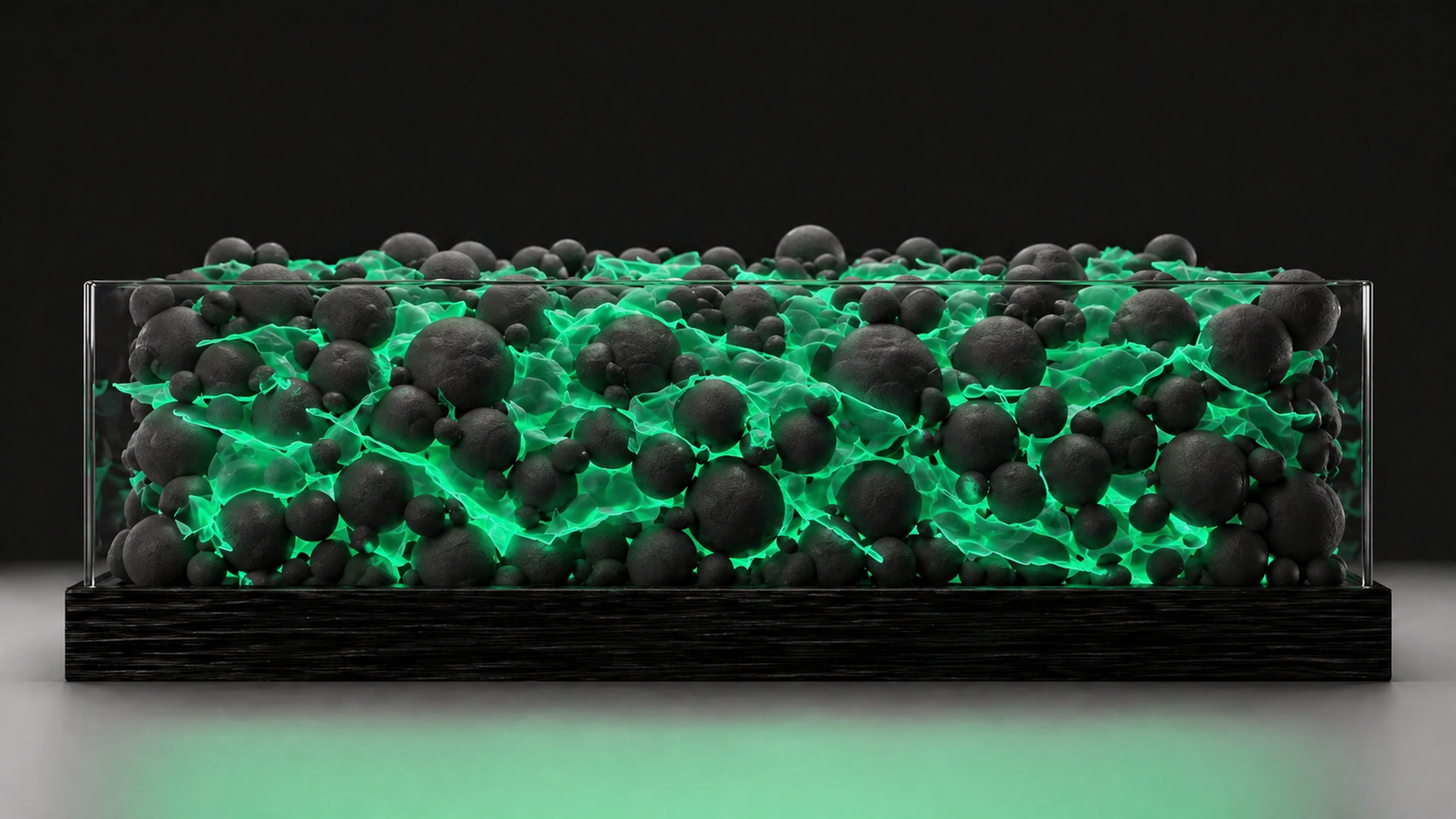
## Dry Electrode Manufacturing
Dry coating introduces new requirements.
In addition to conductivity, materials influence granulate flow, calendering behavior, and electrode formation.
As dry agglomerates, eGraphene can be integrated into dry electrode processes, where it contributes not only to conductivity but also to processing behavior.
## Current Collector Primers
Current collector primers represent another application area. Here, the objective is not conductivity throughout the electrode but conductivity across a specific interface. Because eGraphene forms conductive networks at low loading, it can contribute to thinner primer layers that maintain electrical and mechanical functionality.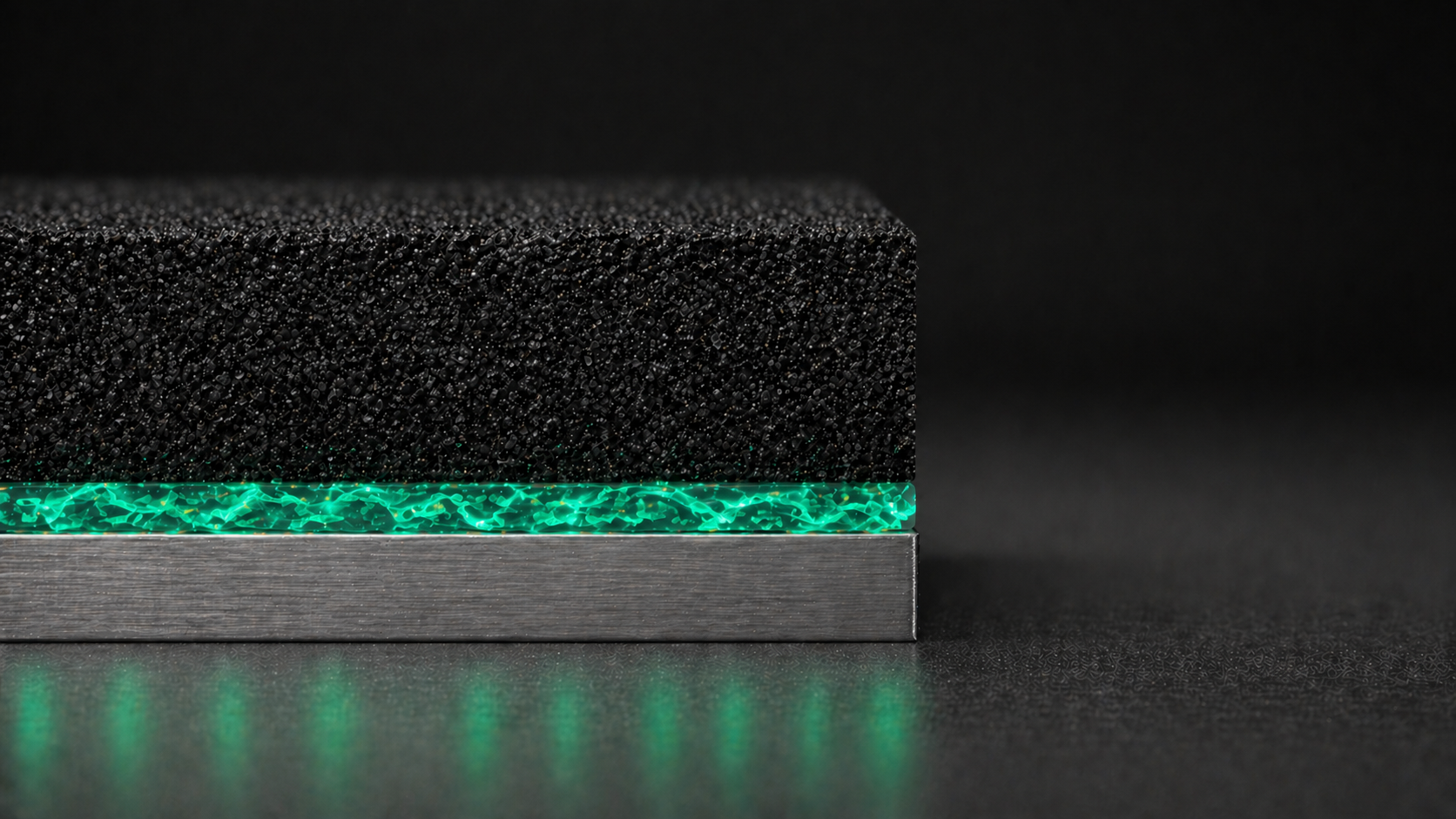
## Interface Engineering
The same material properties become relevant again in lithium-metal and solid-state concepts. Instead of modifying an electrode formulation, eGraphene can be applied as an ultra-thin interfacial layer. Potential applications include:
lithium deposition layers
lithium-metal processing surfaces
lithium / separator interfaces
lithium / solid-electrolyte interfaces
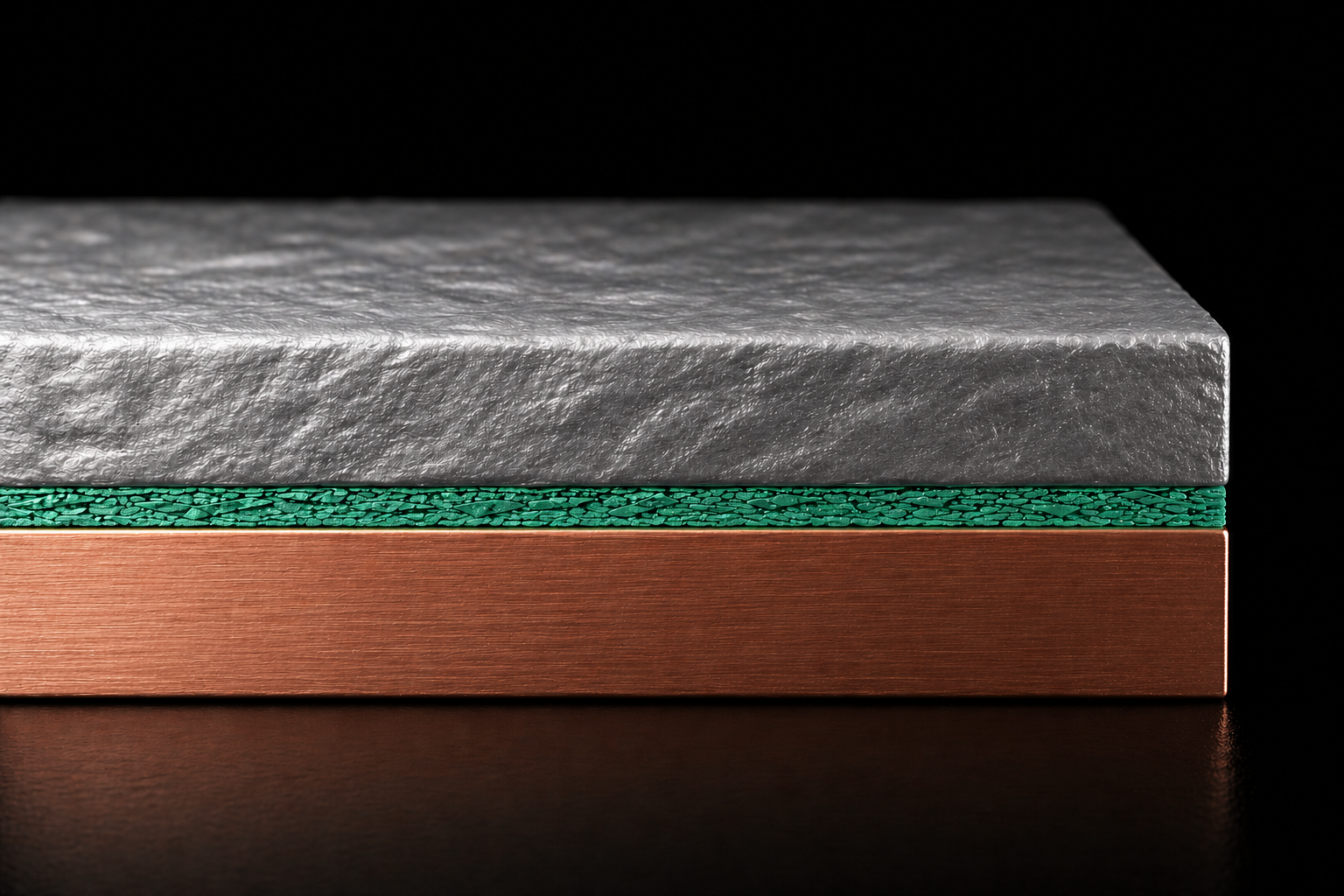
In these systems, the goal is not primarily conductivity, but controlling what happens at the interface.
## One Material, Multiple Entry Points
Although these applications appear very different, they are based on the same underlying material characteristics: Conductive 2D flakes, controllable surface chemistry, and scalable coating and formulation options.
This combination allows eGraphene to be integrated at multiple locations within the battery cell. Not because it performs a single function everywhere. But because the same material properties can address different challenges depending on where the material is used. That is what turns graphene from a conductive additive into a platform material.