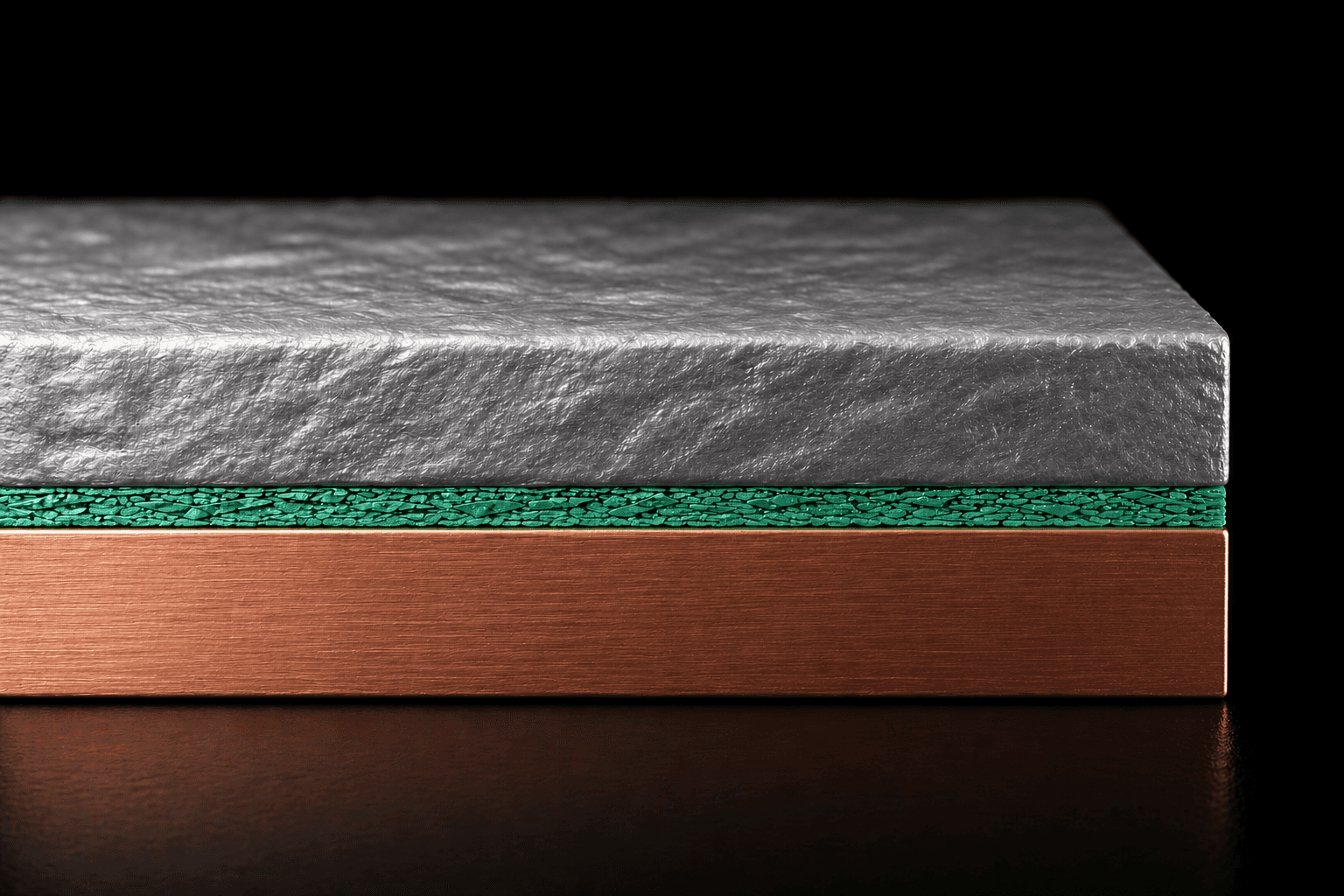
Engineering Li-Metal Interfaces with eGraphene
Lithium-metal batteries are often limited by what happens at the interface. Explore how ultra-thin carbon coatings can influence lithium deposition, contact stability, and next-generation battery architectures.
Lithium-metal anodes can significantly increase battery energy density because lithium replaces graphite as the negative electrode material. The challenge is cycling stability. During charging, lithium ions are reduced and deposited as metallic lithium. Ideally, this happens uniformly. In practice, small differences in surface chemistry, roughness, and local current density can create preferred nucleation sites. This can lead to uneven lithium growth, dendrite formation, voids and contact loss during stripping or localized degradation at the interface.
These effects are especially critical in anode-less and solid-state concepts, where lithium is deposited directly at the interface between current collector, lithium metal, and separator or solid electrolyte.
## Why Thin Interface Layers Matter
One way to influence lithium deposition is to modify the surface on which lithium nucleates. A thin interfacial coating can change local conductivity, surface energy, and lithium affinity. This can help distribute lithium more evenly and reduce localized deposition.
For this purpose, the coating must be:
conductive
very thin
processable on relevant substrates
compatible with lithium-containing interfaces
## Where eGraphene Fits
eGraphene combines a conductive 2D structure with processable surface chemistry and lithiophilic behavior. This makes it suitable for thin carbon-based interface coatings in three areas:
### 1. Lithium Deposition on Current Collectors
A thin eGraphene coating can act as a lithiophilic layer on a current collector. The purpose is to guide lithium nucleation and support more uniform deposition across the surface.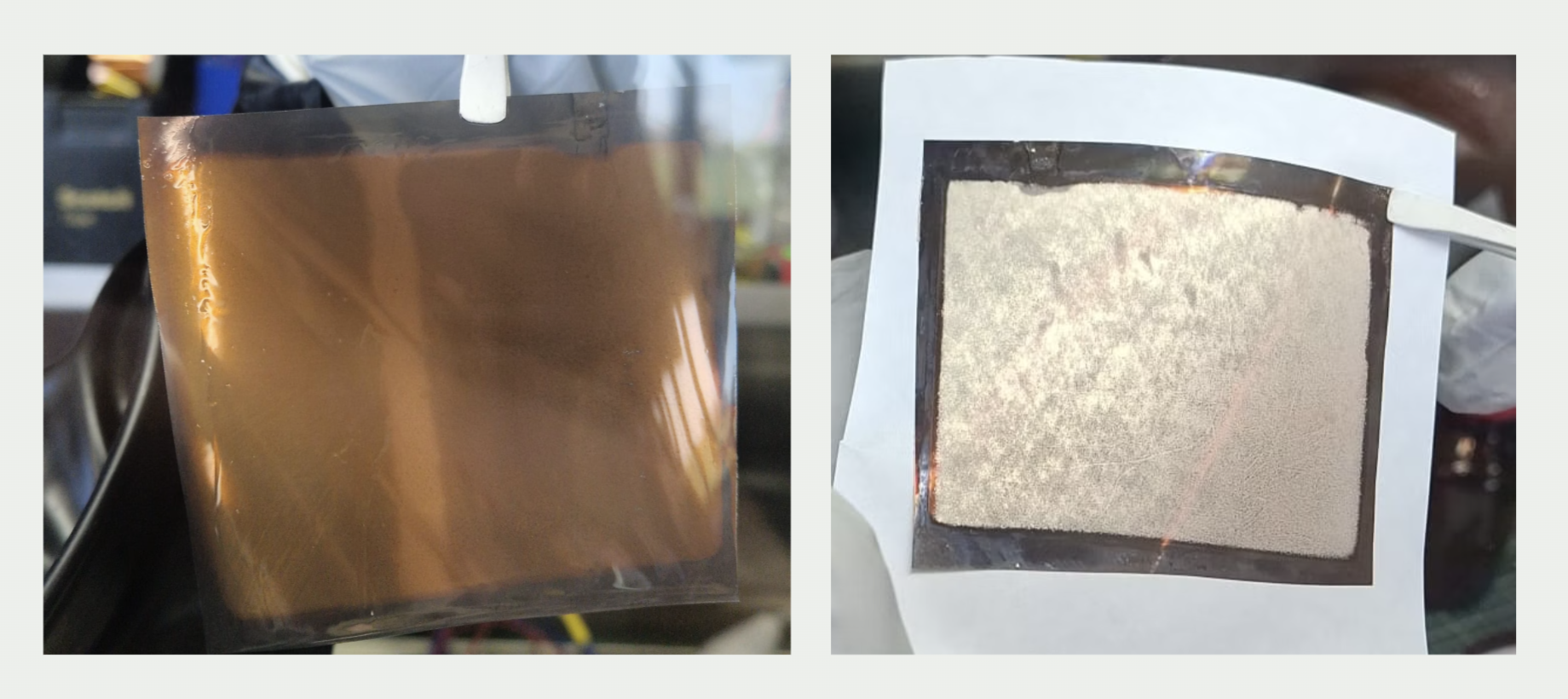
### 2. Lithium-Metal Production and Transfer
Substrates used in lithium-metal production or transfer can also be coated with thin functional layers. Here, the coating can influence how lithium deposits, releases, or interacts with the substrate surface during processing.
### 3. Lithium / Separator or Solid-Electrolyte Interfaces
In solid-state and anode-less concepts, the contact between lithium and separator or solid electrolyte is critical. Thin eGraphene layers can help improve electronic contact and interface stability where lithium meets these materials.
## The Core Idea
Li-metal concepts require a deposition process that produces homogeneous layers. They need better control over where and how lithium grows. That makes the interface one of the most important design elements in Li-metal, solid-state, and anode-less battery systems.
eGraphene is one possible tool for that interface: a thin, conductive, processable carbon layer designed to influence lithium behavior without adding significant thickness.